

Can AI Really Do Your Job? Exploring the GenAI in Corporate Affairs
Can AI Really Do Your Job? Exploring the GenAI in Corporate Affairs
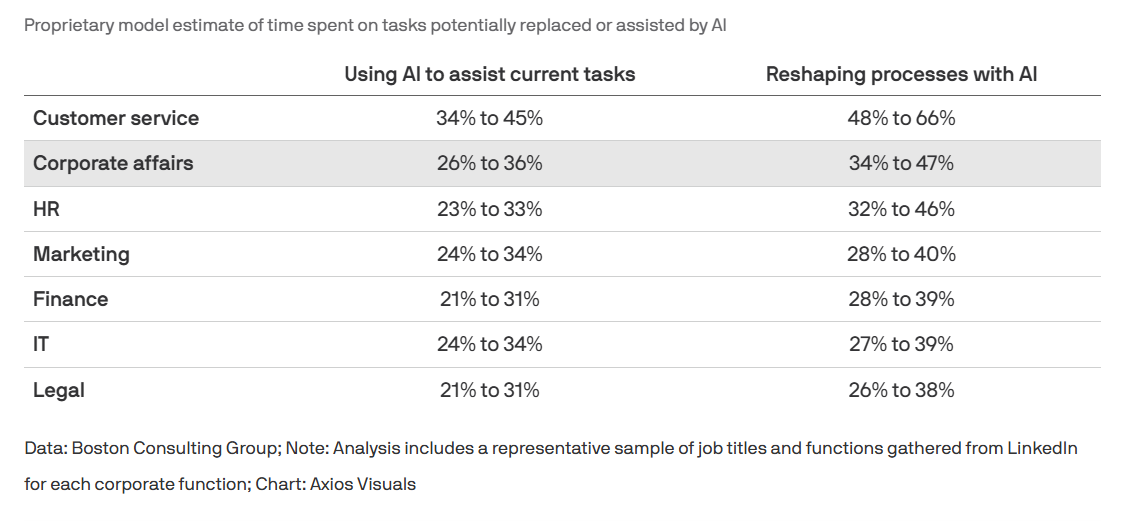
Imagine a world where the bulk of your corporate affairs tasks are handled by AI. Sounds futuristic, right? The latest Boston Consulting Group report reveals that over 80% of these tasks can be automated. And guess which department is at the forefront of this AI transformation? Dive into the details to see how AI automation is reshaping corporate communications and discover the future of work in this rapidly evolving field.

The corporate affairs landscape is undergoing a significant transformation, with AI at the forefront of this change. This section explores the automation potential, key insights from the BCG report, and the role of GenAI in communications.
Understanding Automation Potential
The potential for automation in corporate affairs is vast and rapidly expanding. AI technologies are now capable of handling a wide array of tasks traditionally performed by human professionals.
Recent studies indicate that up to 80% of corporate affairs work can be augmented or automated by AI. This includes tasks such as data analysis, report generation, and even some aspects of stakeholder communication.
The implications of this automation potential are far-reaching, promising increased efficiency and productivity across corporate communications departments. However, it also raises questions about the future role of human professionals in the field.
Key Insights from the BCG Report
The Boston Consulting Group (BCG) report offers crucial insights into the impact of AI on corporate affairs. It highlights the transformative potential of AI across various business functions.
Key findings from the report include:
Over 80% of corporate affairs tasks can be automated or augmented by AI
Communications departments are at the forefront of AI adoption
AI has the potential to significantly enhance decision-making processes
The report also emphasises the need for organisations to adapt their workforce strategies to harness the full potential of AI technologies.
GenAI's Role in Communications
Generative AI (GenAI) is playing an increasingly significant role in corporate communications. This advanced form of AI can create human-like text, images, and even videos.
In the context of corporate affairs, GenAI can:
Draft press releases and internal communications
Generate personalised stakeholder messages
Create data-driven reports and presentations
While GenAI offers impressive capabilities, it's important to note that human oversight remains crucial. The technology should be seen as a tool to enhance human capabilities rather than replace them entirely.
AI Automation in Business

AI automation is reshaping business processes across industries. This section examines how AI is streamlining corporate processes, enhancing the communications function, and the challenges that come with this technological shift.
Streamlining Corporate Processes
AI automation is revolutionising corporate processes, bringing unprecedented efficiency and accuracy to various business functions. By leveraging machine learning and data analytics, companies can optimise their operations significantly.
Key areas where AI is streamlining processes include:
Data analysis and reporting
Customer service and engagement
Supply chain management
Financial forecasting and risk assessment
These improvements lead to faster decision-making, reduced operational costs, and enhanced overall business performance. However, successful implementation requires careful planning and integration with existing systems.
Enhancing the Communications Function
The communications function is experiencing a significant transformation through AI automation. AI technologies are enhancing various aspects of corporate communications, from content creation to audience analysis.
AI-powered tools can:
Analyse vast amounts of data to identify communication trends and preferences
Generate tailored content for different stakeholder groups
Optimise the timing and channels for message delivery
These capabilities allow communication professionals to focus on strategy and relationship-building, while AI handles more routine tasks. The result is more targeted, effective, and efficient communication strategies.
Challenges and Considerations
While AI automation offers numerous benefits, it also presents challenges that organisations must address. These considerations are crucial for successful implementation and long-term sustainability of AI solutions in corporate affairs.
Key challenges include:
Ensuring data privacy and security
Managing the ethical implications of AI decision-making
Upskilling employees to work alongside AI technologies
Maintaining the human touch in stakeholder communications
Organisations must develop comprehensive strategies to address these challenges, balancing the benefits of AI automation with potential risks and ethical considerations.
Future of Work with AI

The integration of AI in corporate affairs is reshaping the future of work. This section explores the impact on corporate professionals, the need for adaptation, and the skills required in the AI era.
Impact on Corporate Professionals
The rise of AI in corporate affairs is significantly impacting the roles and responsibilities of professionals in the field. While some tasks are being automated, new opportunities are emerging for strategic thinking and AI management.
Key impacts include:
Shift from routine tasks to more strategic, creative work
Increased focus on data interpretation and AI oversight
New roles emerging in AI strategy and implementation
Corporate professionals must be prepared to adapt their skills and mindset to thrive in this evolving landscape. The future of work in corporate affairs will likely involve a closer collaboration between human expertise and AI capabilities.
Adapting to New Technologies
Adapting to AI technologies is crucial for corporate professionals to remain relevant and effective in their roles. This process involves both technical and cultural adaptation within organisations.
Steps for successful adaptation include:
Fostering a culture of continuous learning and innovation
Providing training and resources for AI literacy
Encouraging experimentation with AI tools in daily work
Developing clear guidelines for AI use in corporate communications
Organisations that prioritise this adaptation process are better positioned to leverage AI technologies effectively and maintain a competitive edge in the rapidly evolving business landscape.
Skills for the AI Era
The AI era demands a new set of skills from corporate professionals. While technical skills are important, soft skills and strategic thinking abilities are equally crucial.
Key skills for the AI era include:
Data literacy and interpretation
AI ethics and governance understanding
Critical thinking and problem-solving
Emotional intelligence and stakeholder management
Adaptability and continuous learning
Professionals who develop these skills will be well-equipped to navigate the changing landscape of corporate affairs and leverage AI technologies to their full potential.
Strategic Implementation and Decision-Making
Implement

ing AI in corporate affairs requires strategic planning and informed decision-making. This section explores how organisations can navigate AI solutions, adopt vendor-neutral approaches, and plan for sustainable growth.
Navigating AI Solutions
Navigating the landscape of AI solutions can be complex for organisations. It's crucial to align AI implementations with overall business objectives and communication strategies.
Key considerations when selecting AI solutions include:
Compatibility with existing systems and workflows
Scalability and flexibility for future needs
Level of customisation required
Total cost of ownership, including implementation and maintenance
Organisations should conduct thorough assessments of their needs and evaluate multiple solutions before making decisions. Pilot projects can be valuable in testing the effectiveness of AI tools in specific corporate affairs contexts.
Vendor-Neutral Approaches
Adopting a vendor-neutral approach when implementing AI solutions can provide organisations with greater flexibility and control over their technology stack. This strategy allows for the selection of best-of-breed solutions for specific needs.
Benefits of a vendor-neutral approach include:
Reduced risk of vendor lock-in
Ability to integrate diverse AI tools and platforms
Greater negotiating power with vendors
Flexibility to adapt to changing technology landscapes
However, this approach requires strong in-house IT capabilities and a clear strategy for integration and management of multiple AI solutions.
Planning for Sustainable Growth
Planning for sustainable growth with AI in corporate affairs involves balancing short-term gains with long-term strategic objectives. Organisations must consider how AI implementations will scale and evolve over time.
Key elements of sustainable AI growth planning:
Developing a roadmap for gradual AI integration
Investing in employee training and development
Establishing governance frameworks for AI use
Regularly reassessing and adjusting AI strategies
By taking a measured, strategic approach to AI implementation, organisations can ensure that their investments in AI technology deliver sustainable value in the long term.
The Road Ahead for Corporate Communications

As AI continues to reshape corporate communications, organisations must anticipate future trends, prepare for change, and build trust in AI integration. This section explores these crucial aspects of the evolving corporate communications landscape.
Predicting Industry Shifts
Anticipating future trends in corporate communications is essential for staying ahead in the AI-driven landscape. While precise predictions are challenging, certain shifts are becoming increasingly apparent.
Emerging trends include:
Hyper-personalisation of stakeholder communications
Real-time sentiment analysis and response
AI-driven crisis management and reputation monitoring
Integration of virtual and augmented reality in corporate messaging
Organisations that stay attuned to these trends and adapt their strategies accordingly will be better positioned to leverage AI effectively in their communications efforts.
Preparing Organisations for Change
Preparing for the AI-driven transformation of corporate communications requires a holistic approach that encompasses technology, people, and processes. Organisations must create an environment that supports innovation and adaptation.
Key steps in preparing for change:
Cultivating a culture of digital literacy and continuous learning
Developing clear AI adoption roadmaps and milestones
Establishing cross-functional teams to drive AI integration
Regularly communicating the vision and benefits of AI adoption to all stakeholders
By taking these steps, organisations can create a foundation for successful AI integration and ensure that their corporate communications function remains effective and relevant in the evolving business landscape.
Building Trust in AI Integration
Building trust in AI integration is crucial for its successful adoption in corporate communications. Stakeholders, both internal and external, need to feel confident in the use of AI technologies for communication purposes.
Strategies for building trust include:
Transparency about AI use in communications
Clear guidelines and ethical frameworks for AI applications
Regular audits and assessments of AI systems
Maintaining human oversight and accountability
By prioritising trust and transparency in AI integration, organisations can harness the full potential of these technologies while maintaining the credibility and authenticity of their communications efforts.